Tuesday, November 10, 2020

2 Flags, 2 Photos, 9 Men, and a Lot of Controversy!


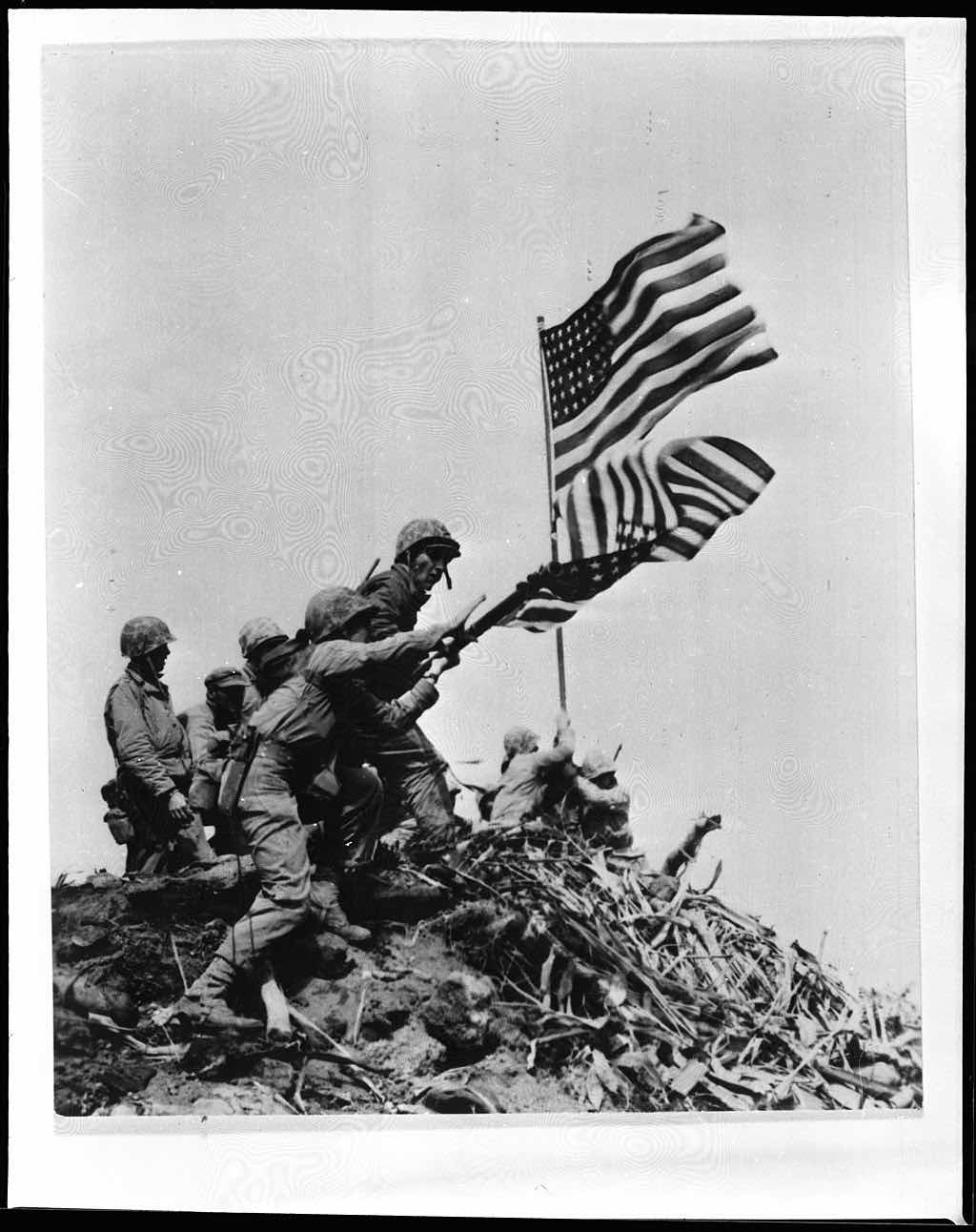
The Marines raised a flag on Suribachi. The Marines then raised another flag on Suribachi. Joe Rosenthal took a picture of the second flag raising. The Secretary of the Navy requested the first flag. Marine Commander “Howlin’ Mad” Smith said, “Like Hell!” The Secretary of the Navy also praised the flag raising, saying, “...the raising of that flag on Suribachi means a Marine Corps for the next five hundred years!”

Fighting on Iwo would last for 31 more days. Nearly 6,000 Marines and Naval personnel would die. Of the original 21,000+ Japanese defenders of Iwo, 214 would be captured, and an estimated 300 would flee. The rest were either killed in battle or committed suicide to avoid capture. 

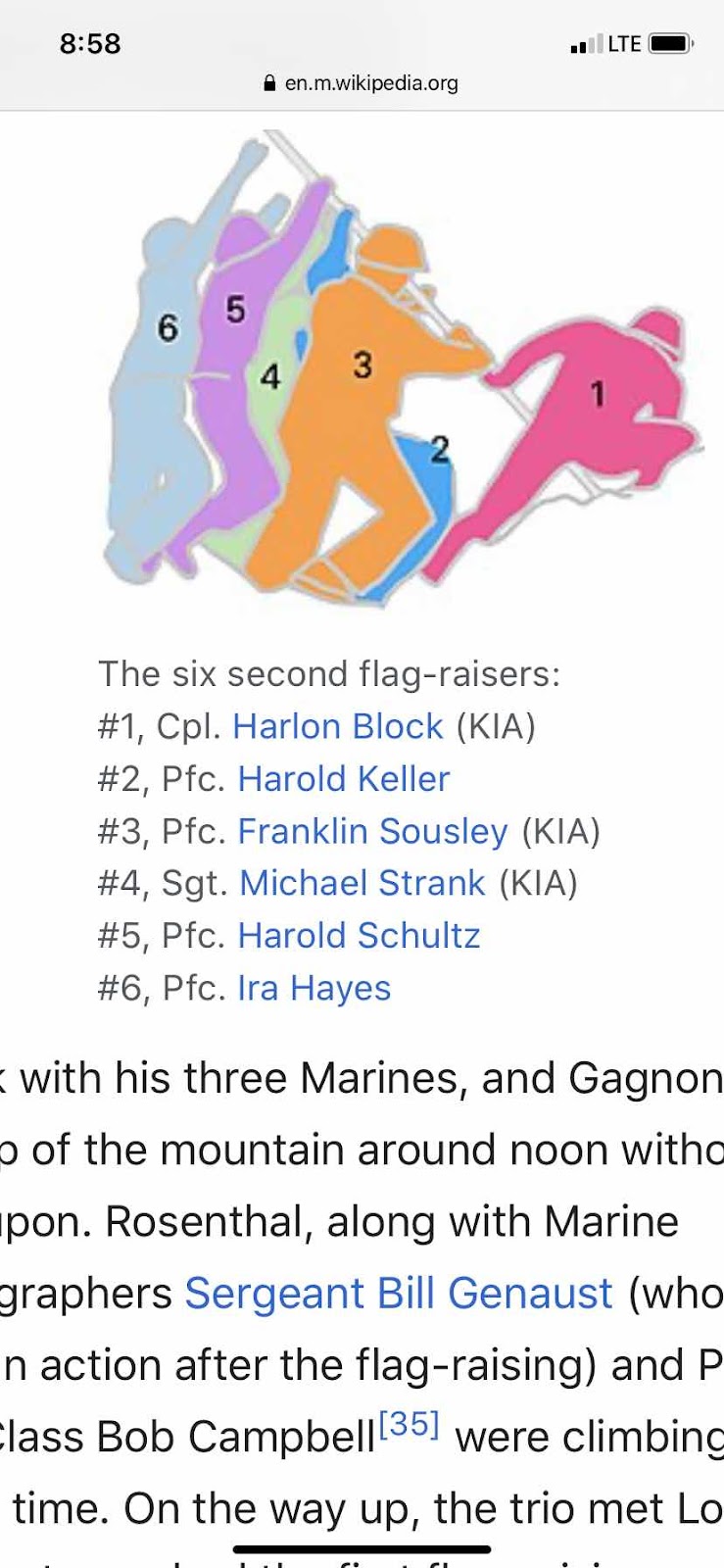
Of the 6 flag raisers initially identified in the photo of the second flag raising, Mike Strank, Hank Hansen, and Franklin Sousley would die fighting on Iwo Jima. They would not get to participate in the pomp and circumstances that the other three would be forced to participate in.

17 hours after Rosenthal took his photo a copy was transmitted to AP headquarters in NYC and distributed to media entities throughout the US. Associated Press photo editor John Bodkin first saw the photo and said, “Here’s one for all time!”

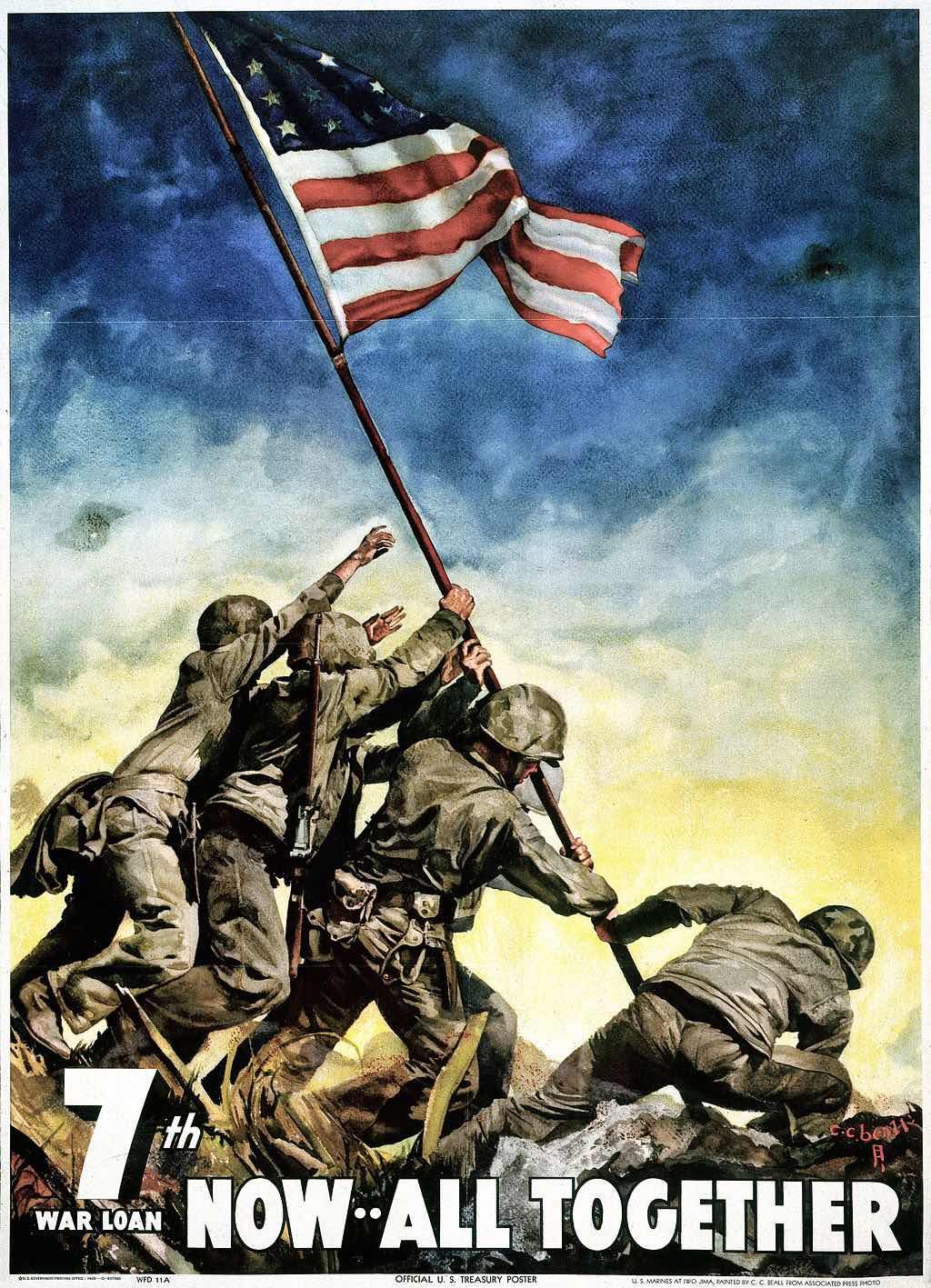
President FDR saw the photo and decided it would be a valuable tool in the effort to fund the war effort. The US had been supplying our Allies worldwide for nearly six years, and waging war for 3 and 1/2 years. In spite of the six previous war loan drives, the Treasury was nearly bankrupt. More money was needed, but the feeling was that it would be difficult to raise the money needed now that Germany had been defeated. Many people seemingly lost interest because they thought it was soon going to be over. 

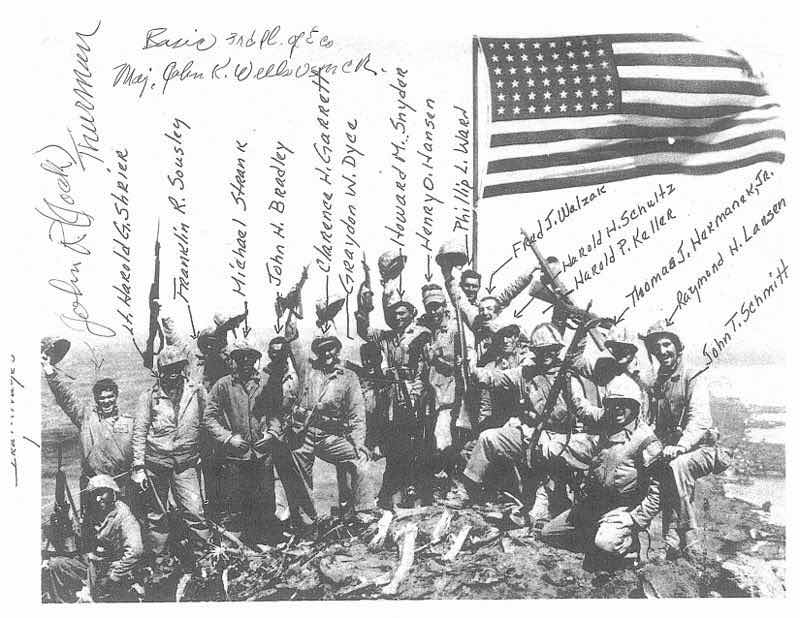
Controversy of another kind in regard to the Rosenthal photo also began to develop. After shooting the second flag raising photo, Rosenthal posed some of the men around the flag and took what is now called “the Gung Ho Shot”. It was marked with the identies of every man in the photo, and no one at the time knew how vital this photo would become in the future in regard to correcting mistaken identities.

Word began to spread throughout the US, after people were told that the famous photo was of the second flag raising, that Rosenthal staged the shot, and that it wasn’t as spontaneous as the people were being led to believe. A few days after the photo was taken, Rosenthal was back in Guam. He was asked if he had posed the flag photo, and he said, “Sure!” He thought the question was in regard to the “Gung Ho!” Photo, and not the photo of the flag raising.

Many in the US now began to feel that the photo was a phony, and that it was indeed staged. Robert Sherrod, from Time-Life went so far as to say that Rosenthal should be stripped of the Pulitzer Prize that he had won with his photo.Rosenthal denied the claims and insisted the photo was indeed spontaneous.

Investigations by the media, the War Department, and the Marine Corps itself proved the fact that the photo was legitimate. The 7th War Loan Drive began in earnest.

Ira Hayes, Rene Gagnon, and Doc Bradley were recalled from their duty stations and participated in numerous fund raisers throughout the country. They staged the planting of the flag in DC, NYC, and even at Chicago’s Soldier Field. Crowds were large, and excitement was rampant. The three soon became legendary figures. More importantly, the money began pouring in. 

Ira Hayes began having serious issues with the bond drive and how it was being presented to the public. Speculation now was that he was suffering from severe Post Traumatic Stress Disorder, though that diagnosis was undetermined at the time. Hayes felt that he abandoned his buddies who were still fighting. He also mourned the loss of so many of his fellow Marines, most notably Mike Strank.  He was an Indian from the Pima Reservation in AZ, and he didn’t want to let his people or his heritage down. He began drinking heavily in an attempt to escape his fears, his loss, and his sadness. He was often drunk during the bond drive, and often was in trouble. One particular instance saw a drunken Ira attacking the owner of a diner and some other people with a chair because the diner didn’t serve Indians. Doc Bradley saved him from arrest by telling the police who they were. Hayes’ commanders, however, weren’t impressed with his behavior. They decided that he was a risk to the entire operation, so they sent him back into combat before the war drive was over.

Rene Gagnon had a girlfriend who accompanied the men on the drive. He acknowledged his part in the flag raising, but said he only played a minor part in it. However, he relished the fame the men were gaining on the war drive, and hoped to use it to his advantage when the war was over. 

Doc Bradley reluctantly participated in the war loan drive. He also said that he only played a minor part in the war. He said he was no hero, and that the true heroes were the men who never came home. He never talked about his war experience to his family, he avoided requests for speaking engagements after the war, and he refused to do interviews with the media. His family would turn away reporters at the door, and would tell anyone who called that he wasn’t home. Only after he died did his son James learn about his father’s wartime legacy.

It was during the war loan drive that additional controversy started to arise. There were questions over the identity of the flag raisers. Bradley and Hayes both said that one of the men was misidentified.They said that Hank Hansen was not in the photo. Both said that a Marine named Harlon Block was the true man in the photo. The drive organizers and the Marine Corps dismissed the claim. Block had also been killed in action. Also, it was too late to change things. They would continue under the premise that Hank Hansen was indeed in the photo. 

After he returned from his service, Ira Hayes walked and hitchhiked 1300 miles,  from the reservation in AZ to Welasco, TX. He went to the home of Harlon Block, where he met Mrs. Block and told her correctly that her son was in the photo. She said that she knew it all along. She recognized Harlon when she first saw the photo, but no one she told believed her. The Marine Corps ignored her, and she felt that nothing could be done.

Shortly afterward, the Marine Corps gave into pressure and conducted an internal investigation. Belle Block,Harlon’s mother, had sent a letter to her Congressman telling him what Hayes had told her. She pled with him to not ignore her, and to ask the Marines to investigate. An inquiry was begun. In January of 1947 the Marine Corps officially admitted the mistake. They acknowledged that Harlon Block was indeed in the photo. Hank Hansen was not. This came in large part from an interview they formally conducted with Ira Hayes. They concluded that;

“ Ira remembered what Rene Gagnon and John Bradley could not have remembered, because they did not join the little cluster until the last moment: that it was Harlon [Block], Mike [Strank], Franklin [Sousley] and [Hayes] who had ascended Suribachi midmorning to lay telephone wire; it was Rene [Gagnon] who had come along with the replacement flag. Hansen had not been part of this action.”

During the dedication of the Marine Corps monument on 10 November 1954, Belle Block was invited to and attended the ceremony. Hank Hansen’s mother was not invited. 

This was not the end of the misidentification controversy. In 2016, it was determined after a thorough investigation that Corpsman John “Doc” Bradley was not in the flag raising photo. Franklin Sousley was in the place originally accredited to Bradley. Marine PFC Harold Schultz was now identified as the 6th Marine in the photo. 

This still was not the end of the misidentification controversy. Further investigation revealed that another mistake was made. In October of 2019, the Marine Corps admitted the mistake. Rene Gagnon was not in Rosenthal’s photo, and was not one of the flag raisers. Marine PFC Harold Keller was now put into Gagnon’s place in the photo.

Ira Hayes had a few speaking engagements to Native American support groups, schools, and other such organizations, but he never could escape his PTSD and his alcoholism. He had a small part portraying himself in the movie, “The Sands of Iwo Jima.” On 24 January 1955, Hayes was found dead in a ditch near an adobe hut on the Pima Reservation near Sacaton, AZ. He is buried in Section 34, Grave 479A of Arlington Cemetery. At his funeral Rene Gagnon said of Ira,  "Let's say he had a little dream in his heart that someday the Indian would be like the white man — be able to walk all over the United States."

Hayes was depicted in various movies throughout the years. In 1960, he was played by Lee Marvin in the movie, “The American”. In 1961, he was played by Tony Curtis in the movie, “The Outsider”. In 2006, he was played by Adam Beach in the movie, “Flags of Our Fathers”. He also was the subject of the song, “The Ballad of Ira Hayes.”

What can we learn from all of this? We can learn that no matter how much research is done, mistakes can be made. We also can learn never to stop studying history. Even those who were there can sometimes get it wrong. Question, study, and learn.

I forgot to add that the 7th War Loan Drive was the most successful of all. While the goal was to raise $9 billion, the six-week drive raised more than $26 billion. 


Raising the Flag on Suribachi!


On 19 February 1945, the USMC began the assault on the island of Iwo Jima. This small, volcanic island would at first glance appear to be insignificant, but it had on it an airfield, and US commanders knew that the airfield would be necessary as a safe haven for any aircraft participating in the aerial assault of the Japanese islands. Iwo also was considered sovereign Japanese territory, so by invading Iwo Jima, the US was actually invading Japan.

The Japanese defenders on Iwo had crafted a great defense system. Throughout the island, there was a series of bunkers, trenches, foxholes, and tunnels. Marines found that as they defeated the enemy in a certain area and moved on, they would often again be attacked from the rear by other Japanese soldiers who moved in from the tunnels. The 21,000+ Japanese defenders were well prepared and willing to fight to the death to secure the island from invasion.

Mt. Suribachi was the most prominent feature on the island. Standing at 546ft above sea level, occupiers of Suribachi had a commanding view of the entire island, as well as the area around it. Japanese used it as an observation point from which to call in artillery strikes on invading Marines, so it became the initial focal point of the attack.

On February 23, a platoon of Marines made it to the top of Suribachi. They had brought with them an American flag. They used pipe and rocks, and a few of them raised the flag atop Suribachi. This brought a great amount of cheering from the Marines and other US forces on the island, and ultimately every naval ship in the invasion force joined in by blowing their horns, while the crews cheered and waved.

The Japanese near and in the tunnels on Suribachi were alerted, and the Marine patrol soon came under fire. They neutralized the fire and pushed the Japanese back in short order, and the celebrations continued.

The Secretary of the Navy, James Forrestal saw the flag, and decided that he wanted it as a souvenir. Upon hearing this, the commander of the 2nd Marine Battalion, Holland “Howlin‘ Mad” Smith said, “To hell with that!”

Forrestal went ashore with Smith and said, “Holland, the raising of that flag on Suribachi means a Marine Corps for the next five hundred years!”

The first flag had been raised by a patrol of 40 men under 1st Sgt. Harold Schrier. The patrol left at 8am, and the first flag was raised at around 10:15. Schrier would later receive the Navy Cross for his actions on Iwo Jima.

Marine Sergeant Mike Strank was given orders by “Howlin’ Mad” Smith to find a replacement flag, take a few men up the hill, replace the first flag, and bring it back to him. At 54 inches by 28 inches, the first flag was difficult to see from afar. 

Strank sent PFC Rene Gagnon on a mission to find a new flag, and Gagnon delivered. He found a flag that was 96 inches by 56 inches on one of the ships moored at the beach and was given permission to take it.

Strank, Gagnon, and three other Marines went up Suribachi. They were running a phone line to the top of the hill. They also were going to replace the first flag. 

When they reached the top, Strank told the Marines there to find a pole and give him a hand. They found a long section of pipe, tied the flag to it, and took the first flag down.

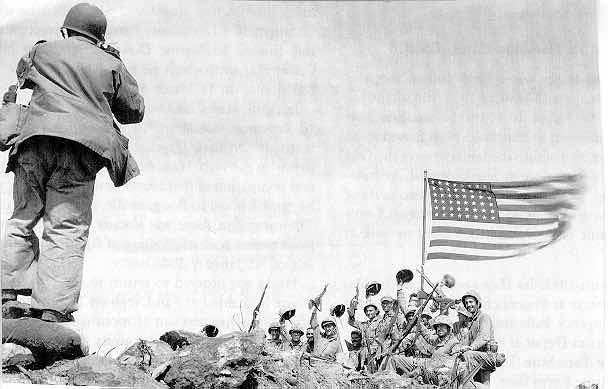
A group of five other Marines assisted Strank in raising the second flag. Photographer Joe Rosenthal was with the Marines, and managed to take one of the most iconic photos in US history. He captured on film the raising of the second flag, but at the time, he had no idea how famous his photo would become.

When asked about later it, Rosenthal remarked, “ Out of the corner of my eye, I had seen the men start the flag up. I swung my camera and shot the scene. That is how the picture was taken, and when you take a picture like that, you don't come away saying you got a great shot. You don't know.”

The 6 Marines in the flag raising photo were later identified as:

USMC Sergeant Mike Strank
                           Hank Hansen
                           Franklin Sousley
                           Ira Hayes
                           Rene Gagnon
USN Corpsman John “Doc” Bradley

No one knew at the time the legacy that this photo would create, and ultimately the controversy that would be generated as a result.


“Happy Birthday, USMC!”


Chesty wants to remind you that today is the 245th birthday of the USMC. Formed in 1775 in the Tun Tavern In Philadelphia, PA, the Marine Corps legacy lives on today. 

Happy Birthday, USMC! You’ve aged well. Here’s to 245 more years!

By the way, look for a two-part post on the Iwo Jima flag raising, the resulting controversy, and the 7th War Bond Drive later today.

Monday, November 9, 2020

Birthday of the USMC and Veteran’s Day...

Due to 10 November being the birthday of the United States Marine Corps, and 11 November being Veteran’s Day, we will be taking a break from our ongoing Kennedy series of posts. Parts 4 and 5 (required due to the scope of the narrative) will resume on Thursday.

JFK and the Election of 1960


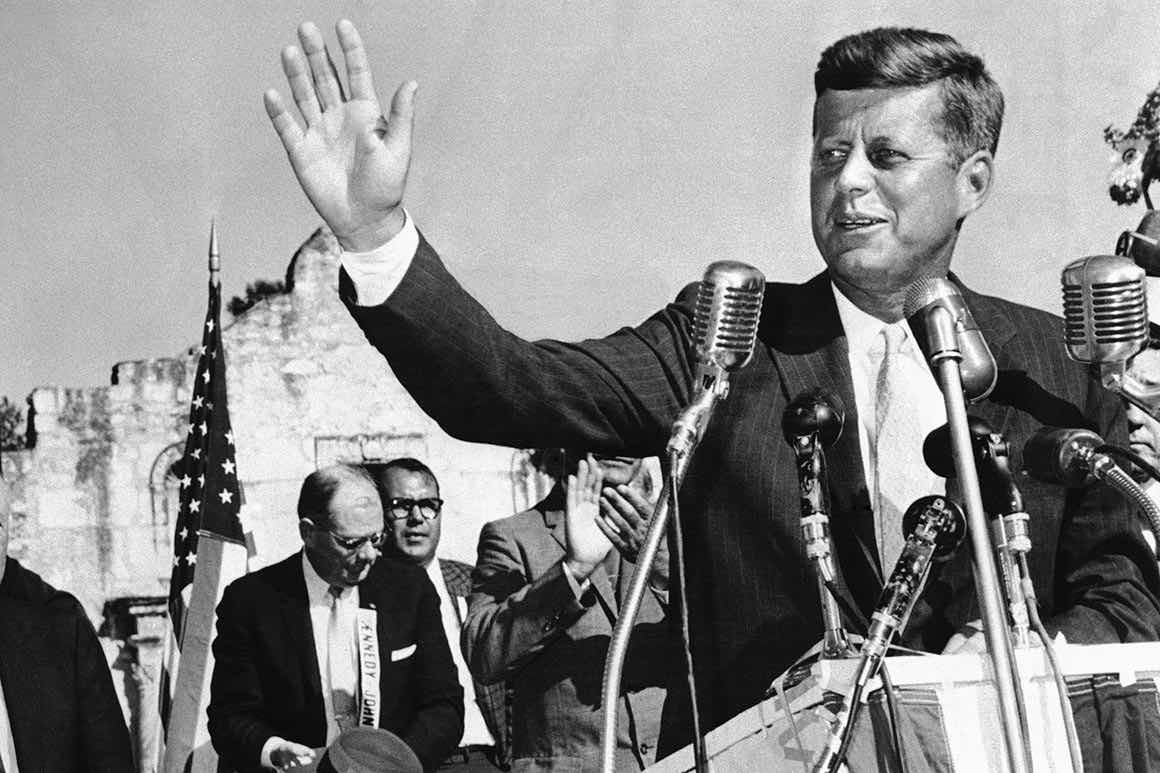
John Fitzgerald Kennedy, also known as JFK, or Jack was the second oldest of the Kennedy sons. His father Joe had his Presidential hopes come to an end when his pro-Nazi sentiments were leaked to the Nazis. His plan to have his oldest son, Joe Jr elected to the Presidency ended when the younger Joe had his plane shot down by the Germans and died.

What now? JFK was also serving in the US Armed Forces. He was serving in the Pacific, and became a national hero after the sinking of his boat, PT-109, and his subsequent rescue. He received a Purple Heart while in the service of his country, but refused the Bronze Star Medal. When asked how he became a famous war hero, Jack often answered, “I let the Japanese cut my boat in half!”

But, as is often the case, there is more to this story. He had applied for enlistment in the Naval Academy in 1940, but was rejected due to back troubles. He lobbied his dad, who had great political power in the FDR administration, to get him in. After repeated pressure by Joe, young Jack was finally admitted. 

Joe Sr. hoped to use his son’s war service for political gain. He first became a US Representative, and later a junior Senator, but Joe wanted more. He wanted his son in the Oval Office, and was willing to do whatever it would take to get him there. 

Getting JFK in the White House was a major project, as the Republican nominee in 1960 was Richard M. Nixon. Nixon was Eisenhower’s Vice President, and was the favorite in the race. JFK also had a few things going against him. He was only 42, and his experience was questionable. He also was Catholic in a time when Catholics were looked upon with great scorn. JFK’s boyish good looks won over many, and he ultimately won a highly contested and very close race against Nixon. His age made him the youngest President elected to the office. 

His younger brother Bobby was his campaign manager, and he ran a marvelous campaign JFK and Bobby seemingly disagreed on only one thing. Bobby was highly against having Lyndon B. Johnson as JFK’s running mate. He saw Johnson as being anti-labor union, and knew that Jack would need the support of the unions to win the election. 

Joe Sr didn’t care. He had connections in the labor unions, he had great wealth, he had numerous contacts in organized crime syndicates, and he was willing to do whatever it would take for JFK to win the election. 

More to come...

Sunday, November 8, 2020

Joe Kennedy, Sr.


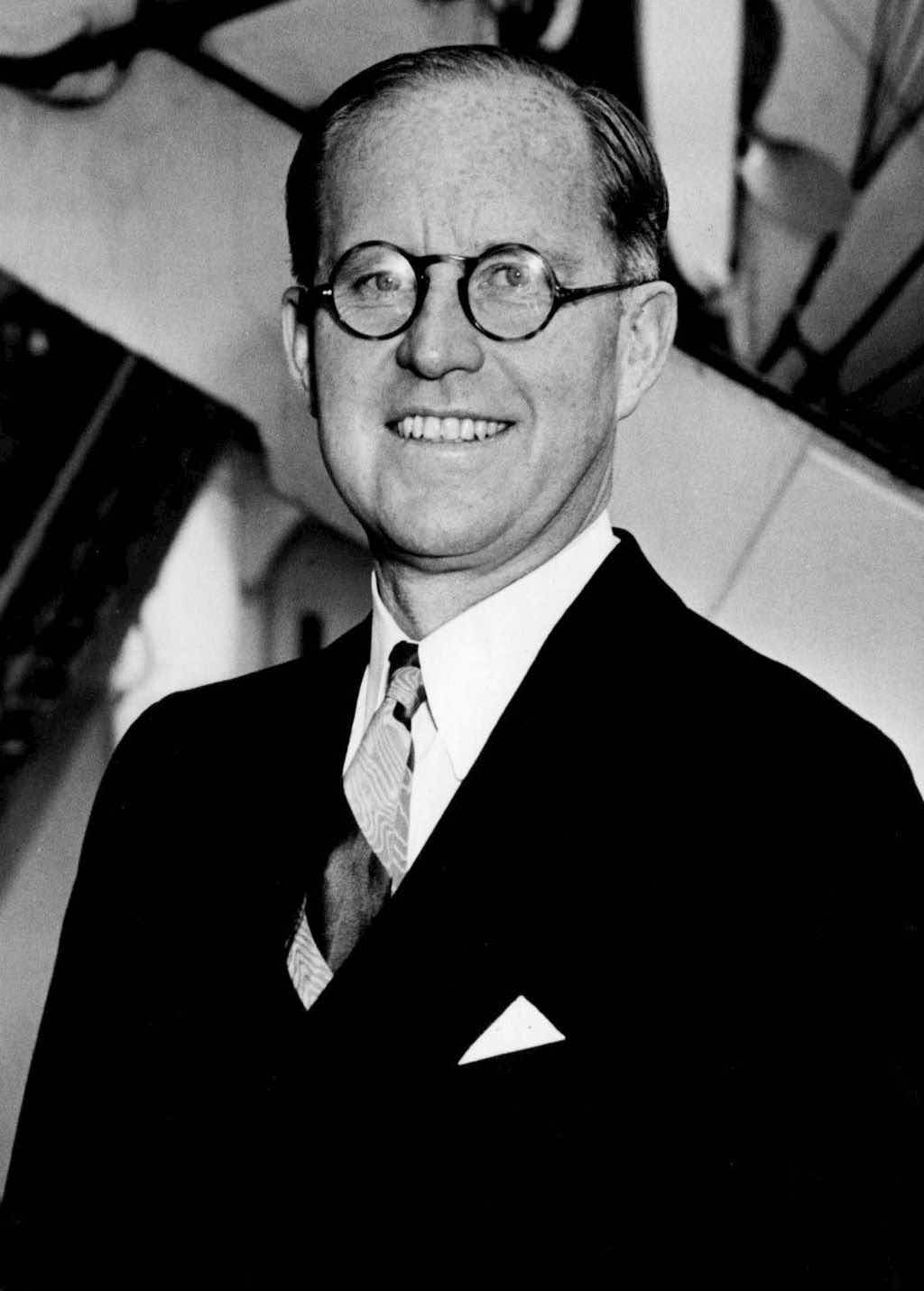
Joe Kennedy was the patriarch of the wealthy and powerful Kennedy political family. I’ll probably catch flak for this, but we all know how Joe made a large share of his money. Internet sites like Wikipedia will surely dismiss the claims, but during Prohibition, Joe made his money bootlegging. He bought, distributed, and sold illegal alcohol. 

He wasn’t alone. Many people during the time did exactly the same thing. However, dealing in an illegal and highly lucrative activity required a lot of friends. Joe acquainted himself with many organized crime bosses. It’s speculated by many that Joe had dealings with people like Al Capone and Lucky Luciano. Joe used these dealings to establish strong ties to Mafia bosses. Names like Sam Giancana and others would become common when mentioning Joe Kennedy. (Mob boss Sam Giancana called Joe, “the biggest crook who ever lived”).

After Prohibition ended, Joe kept control of three large alcoholic beverage corporations. He also became heavily involved in the stock market. He became chair of the Securities and Exchange Commission under FDR, and was said to have used knowledge gained from his position to cash out big before the stock market crash of 1929.

At the start of WWII, Joe took criticism for his desire of appeasing the Nazis and trying to force non-intervention by the US. These desires would later come back to haunt him. Joe had been named by FDR as Ambassador to the Court of St. James. At first, the British welcomed him and openly supported his appointment. However, as word of his pro-Nazi sentiment spread, Joe was vilified and demonized by the British population. He was described by a British senior Foreign Office figure as “a very foul specimen of double-crosser and defeatist (who) thinks only of lining his own pocket”.

Joe had political aspirations. He had hoped to challenge FDR for the Presidency, but those hopes were thwarted when it was learned that confidential letters from Joe to FDR that expressed his pro-Nazi sentiments had actually been leaked to Germany itself.

Joe’s political aspirations, with the eventual goal of occupying the White House now fell upon his oldest son, Joseph Jr,. Joe Jr, however, was killed in action when he was shot down over Britain by the Germans after the US entered the war.

Joe Sr. didn’t give up. He had other sons. His next-in-line son was John Fitzgerald Kennedy. JFK was in the war, served in the Navy, and received heroic accolades after the PT-109 incident. The nation now knew who he was. 

Joe was determined to put JFK in the White House, and was willing to do anything in his power to make it happen!

Saturday, November 7, 2020

The Kennedy Family


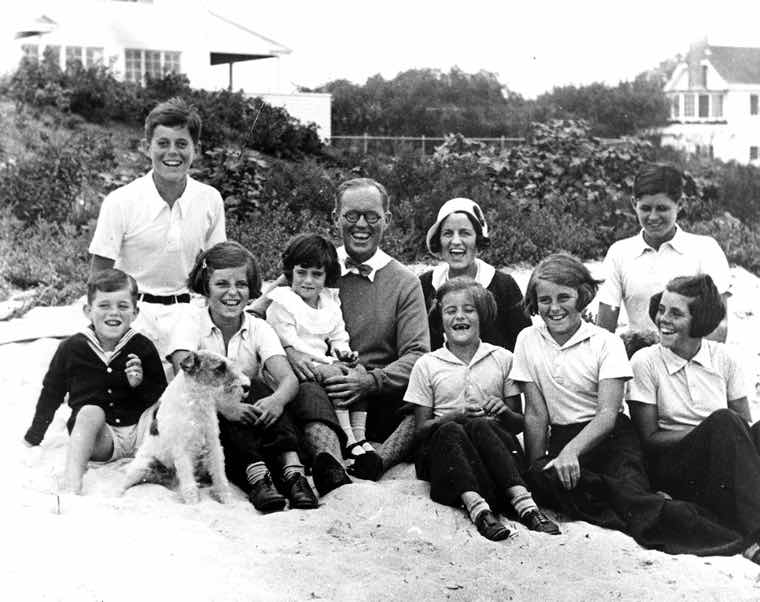
Before we get into any of this, let me remind you all that a lot of what I’m going to post is personal opinion. Also, due to complexity of the topic, this story will be covered in four parts. First will be the intro. Second will be a bio of Joe Sr. Third will be the story of JFK and how he won the election.  Finally, we’ll conclude with my personal theory of the assassination. Feel free to question it. Feel free to post your own theory in the comments. Feel free even to say that I’m wrong. It is a topic of great debate.

By the way, I didn’t just go out and decide this on my own. Instead, have drawn my own personal conclusions from years of research, and from talking to people, like my parents, who were there. 

I feel that these posts are relevant due to our current election and potential scandal, but that’s not where I’m going. We will wait until this one is resolved before I say anything about it. 

However, corruption in US elections is nothing new. Some say it doesn’t happen or is exaggerated. Others say it’s a common occurrence that we’ve been conditioned to accept. As in many things, the truth lies somewhere in the middle. 

The 1960 Presidential Election is one of the most significant elections in our history. John Fitzgerald Kennedy, a wounded, decorated war hero beat Richard Millhous Nixon, another WWII veteran and a man who had served as Vice President under Dwight Eisenhower. By winning, Kennedy became the youngest elected President in our nation’s history. He also was the first catholic elected to the office.

Kennedy’s election was contentious at best. He also, as we all know, was assassinated shortly into his term. Conspiracy theories of all types abound in regard to the Kennedy assassination. Who ultimately was responsible for his death? Why was he killed? Was the assassination of his brother Bobby Kennedy in 1968 related to JFK’s assassination? Many theories exist, but no one can say what happened with any real degree of certainty. We know three things. JFK was elected. JFK was assassinated. Lee Harvey Oswald, JFK’s killer, was killed before he could stand trial. 

By all accounts, Nixon was the favorite in the 1960 election. He was Ike’s VP, and Ike ran a successful Presidency, ending the Korean War, upgrading our infrastructure, and setting the basis for our nationwide interstate highway system. Ike was relatively free of political scandal. Nixon was hoping to use the momentum gained from his partnership in Ike’s administration and easily be elected. 

Yet, he lost. Kennedy won a very close race. How did it happen? More in Part 2.